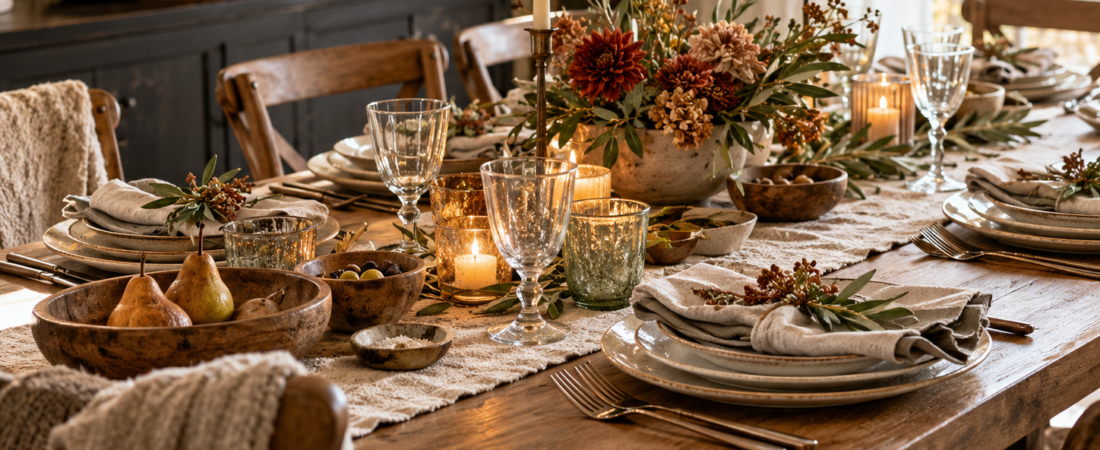
A beautiful fall table starts with a mood, not a shopping list. Choose the dishes you have, pull together two or three colors, and let the setting suit the meal. These three looks work as starting points: warm and natural, softly dramatic, or casual and collected.
Quick fall table-setting checklist
- Set out plates and serving dishes before choosing a centerpiece.
- Choose two or three colors from items you already own.
- Keep the centerpiece low enough for conversation.
- Leave room for food, glasses, and guests to reach their seats.
Start with your table, dinner plates, and guests
Before decorating, lay out one complete place setting. Check that a plate, utensils, and glass fit comfortably without touching the next setting. If your table is narrow, skip chargers and use a napkin on the plate instead of adding another layer underneath.
Decide whether food will be served at the table or from a counter. A centerpiece that looks lovely on an empty table may leave nowhere for the meal. Reserve the serving space first, then decorate what remains.
Warm cream, brown, and greenery
Use cream or white plates as your base. Add beige, camel, or brown napkins, then place a small vase of greenery in the center. A wood table can provide the warmth on its own; a runner is optional.
Keep the arrangement low enough for conversation. If you have two small vessels rather than one large vase, use them with a little space between them. Choose greenery suitable for the household, especially if pets or children may reach it.
This look suits an everyday family dinner or a relaxed Thanksgiving meal. Its strength is texture: linen, wood, ceramic, and a touch of green. You do not need a pumpkin at every seat to establish that it is fall.
Olive green, dark accents, and soft light
Start with neutral dishes and olive napkins, or use any muted green fabric you already own. Bring in a dark accent through a vase, small bowl, or existing candleholders. If your room already has black furniture or hardware, that may be all the dark contrast you need.
Repeat one warm metal if you have it, but do not replace usable utensils to match. Battery-operated candles are an easy option for a table with greenery or little hands nearby. Keep fragrances away from the meal.
For an evening gathering, use softer lighting while keeping the food and walking paths easy to see. The atmosphere comes from the balance of light, color, and space rather than a table covered in accessories.
Collected dishes and casual fall patterns
Use a checked napkin, patterned runner, or mix of dishes as the personality of the table. Pick one shared color to connect the pieces. For example, cream plates can tie together brown checks, amber glass, and a small ceramic bowl.
If the pattern is bold, let the centerpiece stay quiet. A simple vase or a low bowl can be enough. Mismatched pieces look considered when the placement repeats: the same napkin fold, glass position, and amount of space at every seat.
This is a good direction for a weekend lunch, a family gathering, or a meal where serving dishes will do much of the decorating.
Check the table from a seated guest’s view
Sit at each side of the table. Can you see the person across from you? Reach your glass without brushing a branch? Put down a serving dish without moving half the display? Adjust until the setting works from a guest’s perspective.
Use only the utensils the menu needs: fork to the left, knife to the right with its blade facing the plate, and a spoon alongside if needed. Place the glass above the knife. A napkin on the plate keeps a narrow table tidy.
For help arranging the whole room, read our guide to hosting dinner in a small dining room. For a simple centerpiece, browse our easy fall centerpiece ideas. Choose the look that feels like your home, then edit until there is room to enjoy it.