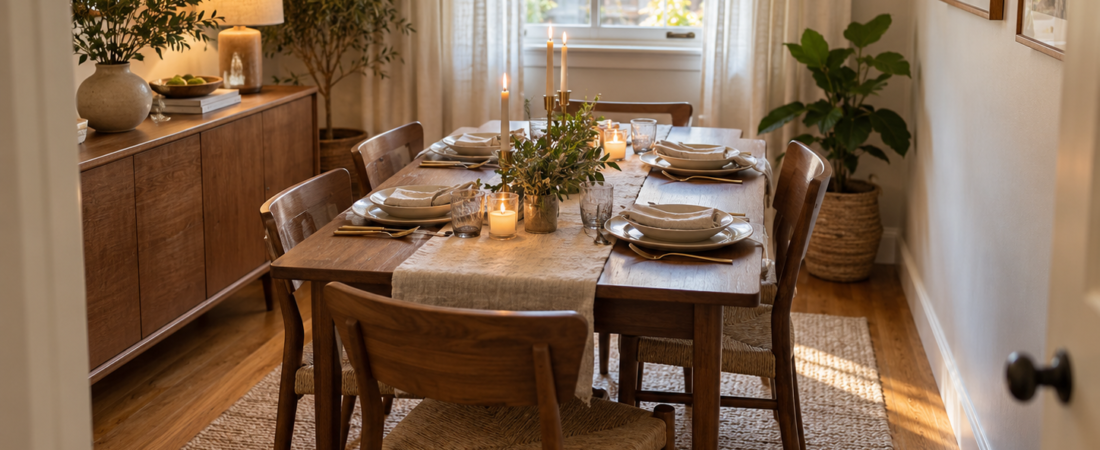
A small dining room can still hold a lovely evening. The trick is to give people room to move, put food where it is easy to reach, and stop asking the dining table to do every job. Start with the space you have and the pieces you already own.
Plan small dining room seating before the centerpiece
Set out the chairs you actually plan to use, then pull each one back as if someone were getting up. Walk from the doorway to every seat while those chairs are occupied. Can someone leave the table without three other people standing? Does a cabinet door still open? That test tells you more than a photograph of an empty room.
If you have an extendable table, test the full arrangement before inviting everyone. The leaf may fit, while the chairs and walking space do not. For a larger group, a second comfortable seating area is better than squeezing in one more place setting.
Give a small dining room three simple jobs
- The dining table: places to sit, eat, and talk.
- A counter or sideboard: serving dishes and extra plates.
- A separate drink spot: glasses, water, and beverages, away from the main food line.
These do not need to be three pieces of furniture. A cleared kitchen counter and the end of an existing console can do the work. Move everyday clutter out of the way rather than buying another cart that needs somewhere to live.
Keep the dining table centerpiece low and narrow
Use one low arrangement or a few small accents instead of a long, crowded display. Sit down and check the view across the table: guests should be able to see each other. Leave space for water, a bread plate, and the dishes you intend to share.
If the table is especially narrow, skip chargers and let the dinner plates be the base of the setting. Fold a napkin on top, add the utensils the meal needs, and use one glass until another is needed. Simple can look intentional when the spacing is consistent.
Choose an easy dinner menu you can enjoy too
Build dinner around one main dish, two sides, and a dessert that is ready before guests arrive. A baked main, a prepared salad, and bread create fewer last-minute tasks than several dishes that all need attention at the stove. Ask about allergies and dietary needs while planning the menu.
Serve from the counter when large platters would overwhelm the table. For a casual gathering, invite guests to help themselves in small groups. Keep serving spoons with their dishes and leave a clear place for used plates so cleanup does not take over the evening.
Use a simple dinner-hosting timeline
- The day before: confirm your guest count, test the seating, choose serving dishes, and prepare what you can.
- Earlier that day: set the table, clear the drink area, and make room for coats and bags.
- Before guests arrive: check the bathroom, put out fresh water, and finish the tasks that would keep you in the kitchen.
When space gets tight, remove something before adding something. One less serving bowl or decorative piece can make the whole table feel more welcoming. A good evening needs a comfortable seat, a thoughtful meal, and a host who gets to sit down.
For a table that feels finished without crowding the room, see our fall table-setting ideas using what you already own and affordable dining room refresh ideas.